
Jacksonville Probate Lawyer
Our experienced attorneys in Jacksonville, FL have the necessary experience to help guide you through the probate process.
If you’ve been named as a personal representative or learned that a loved one’s estate needs court supervision, you are likely facing unfamiliar legal filings, firm deadlines, and family conversations that carry real weight. Probate in Florida is not something most people plan for ahead of time.
At Sahyers Firm LLC, our Jacksonville, FL probate lawyer has spent more than a decade guiding executors, administrators, and beneficiaries through probate cases in Duval County and across Northeast Florida. We represent clients at every stage of estate administration. Schedule a consultation to discuss your situation.
Probate Lawyer Jacksonville, FL
Probate is the court-supervised process of settling a deceased person’s estate. When someone dies in Florida, their assets typically must go through probate before they can be transferred to heirs or beneficiaries. That applies whether or not the decedent left a valid will.
A probate attorney in Jacksonville handles the legal steps needed to open the estate, notify creditors, resolve outstanding debts, and transfer property to the rightful parties. This work involves filing petitions with the circuit court, creating an inventory of assets, paying valid claims, and distributing what remains. In Florida, a personal representative is required to be represented by an attorney during formal administration, which makes choosing the right probate counsel an important early decision.
Types of Probate Cases We Handle in Jacksonville
Probate matters in Jacksonville range from straightforward estate settlements to contested proceedings that stretch across months of litigation. The type of case depends on the estate’s value, whether a valid will exists, and how many parties have a stake in the outcome. Below are the kinds of probate cases our firm handles.
-
Formal administration. This is the standard probate track in Florida. A personal representative is appointed by the court and manages the estate from start to finish under judicial oversight, including creditor notification, asset management, and final distribution of property.
-
Summary administration. Florida provides a shorter path for estates that meet certain eligibility requirements based on the estate’s size or the time since the decedent’s passing. Summary administration eliminates some filing steps and can significantly reduce both the timeline and the legal fees involved.
-
Estate matters. After probate is opened, the personal representative must manage estate property, settle valid debts, file required tax returns, and account for every transaction to the beneficiaries. Mistakes at this stage can expose the representative to personal liability.
-
Will contests. Interested parties may challenge a will on grounds such as undue influence, lack of mental capacity, or improper execution. These disputes can stall the entire administration for months and typically require evidentiary hearings before the court.
-
Trust administration. Not all assets pass through probate. Property held in a family trust is administered outside of court, though the trustee still owes fiduciary obligations to the beneficiaries. We help trustees fulfill those responsibilities and represent beneficiaries who have concerns about trust management.
-
Creditor claims. The personal representative must evaluate creditor claims filed against the estate and pay valid ones from estate assets. Some claims are inflated, expired, or without merit. We help representatives challenge those claims and preserve the estate’s value for beneficiaries.
-
Ancillary probate. When a decedent lived outside Florida but owned real property in the state, a separate probate proceeding is required here to transfer that property. We handle ancillary filings in Duval County and the surrounding circuits.
Why Choose Sahyers Firm LLC as My Probate Lawyer in Jacksonville, FL?
Experience with Florida Probate Law
Founder Christine Sahyers has practiced law in Florida since 2014 and brings over 16 years of combined experience in the legal and mortgage industries. Before founding Sahyers Firm LLC, she served as general counsel at the corporate level, where she oversaw litigation strategy, managed nationwide loan servicing matters, and implemented operational changes that saved more than $200,000 annually in legal costs.
Christine earned her Juris Doctor from Cleveland-Marshall College of Law and is admitted to practice in Florida and the U.S. District Court for the Middle District of Florida. She is a member of the Jacksonville Bar Association and volunteers with Jacksonville Area Legal Aid, K9s for Warriors, and Three Rivers Legal Services.
Our estate planning attorneys in Jacksonville handle probate and estate cases throughout the region, and Christine brings a practical understanding of how the Duval County courts manage probate filings and estate proceedings.
A Record of Results
Our firm has achieved favorable outcomes in probate matters, contract disputes, and real estate litigation across Jacksonville and Northeast Florida. We approach each probate case with attention to the concerns that matter most to the people we represent, whether the issue involves creditor claims, contested wills, or the distribution of estate assets. That same focus extends to keeping clients informed throughout the process so they understand what is happening with the estate and why.
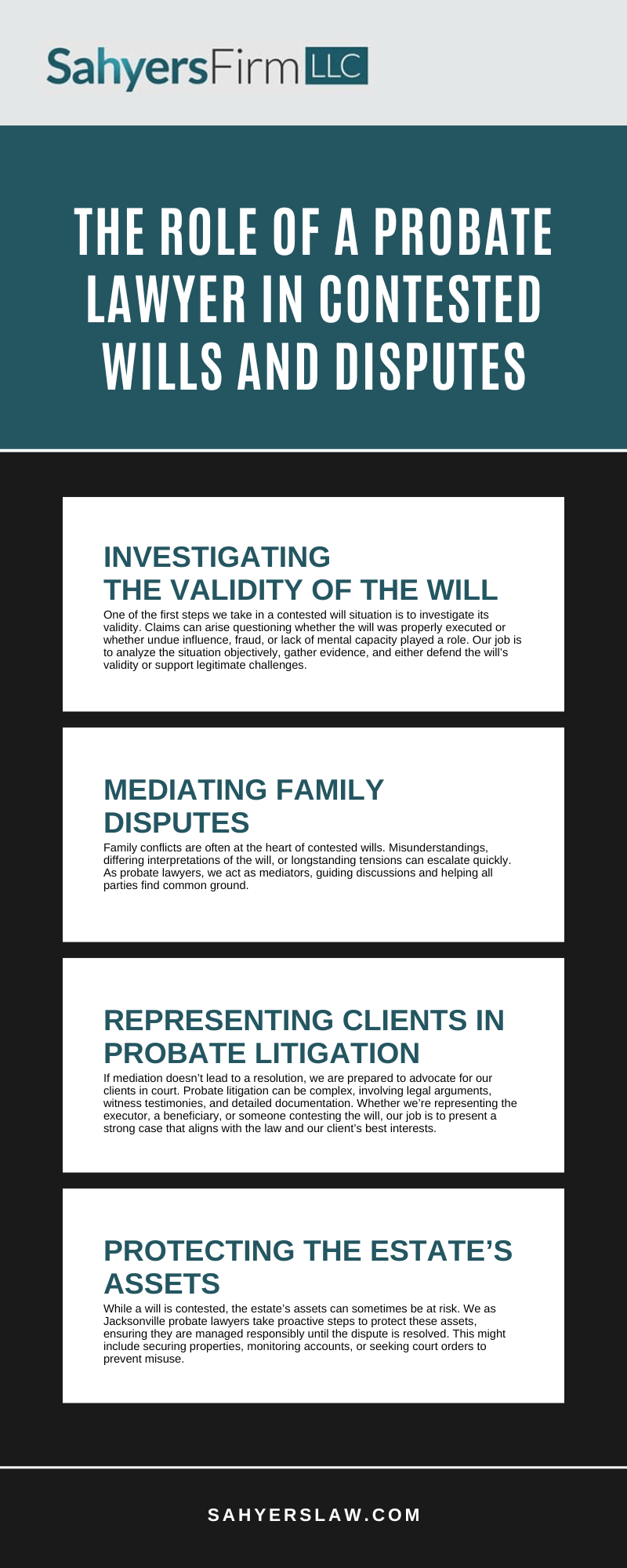
Jacksonville Probate Infographic
What Is Important to Understand About Probate Cases?
Types of Probate Administration and the Personal Representative’s Duties
Understanding how probate works in Florida begins with knowing which type of administration applies and what the law expects of the personal representative. Below is a brief overview.
-
Formal administration is the full probate process, with complete court oversight from the initial petition through final distribution of estate assets.
-
Summary administration is available for estates that meet specific eligibility criteria. It requires fewer filings and typically concludes faster than a formal proceeding.
-
Disposition without administration applies only when the estate’s assets are limited to covering funeral costs or fall within defined exempt categories.
-
The personal representative is appointed by the court and is responsible for inventorying assets, notifying creditors, managing estate property, paying debts and taxes, and distributing remaining assets to beneficiaries.
-
The representative is held to a fiduciary standard. Mismanagement of any part of the estate can lead to personal financial liability.
What Are Important Aspects of a Probate Case?
Several factors determine how a probate case moves forward in Florida. Paying attention to these issues from the beginning can prevent unnecessary delays and reduce the likelihood of disputes among interested parties.
-
Creditor notification. Florida requires the personal representative to publish a notice to creditors and send direct notice to known creditors. The claims period runs from the date of first publication.
-
Homestead protections. Florida law provides specific protections for the surviving spouse and minor children regarding homestead property and certain exempt assets. These protections can significantly affect how estate assets are distributed.
-
Beneficiary rights. Beneficiaries are entitled to receive notice of administration, access to estate records, and a copy of the inventory. When personal representatives fail to meet their administration duties, beneficiaries can petition the court for relief.
-
Business ownership. Estates that include interests in a company or partnership raise questions about valuation and succession that can lead to business disputes among stakeholders and complicate the administration.
-
Inventory and accounting. The personal representative must file a detailed inventory of all estate assets and provide accountings to the court and to interested parties at defined intervals.
What Is the Probate Case Timeline?
Every probate case moves at its own pace. The timeline depends on the type of administration, the complexity of the estate, and whether disputes arise. Here is what a typical formal administration looks like in Duval County.
-
Filing the petition and will with the circuit court and receiving letters of administration usually takes a few weeks.
-
The personal representative publishes a notice to creditors, which starts the defined claims window.
-
An inventory of the estate’s assets is filed and distributed to interested parties.
-
Debts, taxes, and administrative expenses are paid from estate funds.
-
After the creditor period closes and all obligations are satisfied, the personal representative files a final accounting and distributes remaining assets to beneficiaries.
Summary administration typically moves faster, often closing within a few months. If the estate involves contested issues or related proceedings, the timeline can extend well beyond a year. Most uncontested formal probate cases in Florida resolve within six to twelve months.
What Should You Bring to Your Probate Consultation?
Having the right documents ready before you meet with a probate attorney in Jacksonville will help us evaluate your case efficiently. Here is what we typically ask clients to gather.
-
The original or a certified copy of the decedent’s will, if one exists
-
The death certificate
-
A list of known assets, including bank accounts, real estate, investment accounts, and vehicles
-
Records of outstanding debts such as mortgages, credit cards, and medical bills
-
Contact information for known beneficiaries and creditors
During the consultation, we review these materials, outline the steps ahead, and answer questions about timelines, costs, and the personal representative’s responsibilities. We work with clients to identify anything else that may be needed beyond the items listed above.
What Are Important Florida Legal Resources for Probate Cases?
Florida offers several publicly accessible resources that can help you understand probate procedures and locate relevant statutes. Below are useful starting points for anyone involved in a probate case.
-
The Florida Courts website provides general information about probate proceedings, court forms, and links to circuit-level self-help resources across the state.
-
The Florida Bar publishes a consumer pamphlet covering the basics of probate in Florida, including the personal representative’s role, creditor obligations, and alternatives to formal administration.
-
The Florida Legislature publishes the full text of the Florida Probate Code in its online statutes database for public access.
-
The Duval County Clerk of Courts provides probate filing information, required forms, and department contact details for estates administered in Jacksonville.
Reach Out to Sahyers Firm LLC to Schedule a Consultation
If you are dealing with a probate matter in Jacksonville, FL, Sahyers Firm LLC is here to help. We represent executors, administrators, and beneficiaries across Duval County and throughout Northeast Florida. Contact us to schedule a consultation and discuss the specifics of your case. We respond to inquiries promptly and aim to provide clarity from the first conversation.
Probate Statistics in Jacksonville
 If a parent, spouse, or other relative has died and left property in Jacksonville, a probate lawyer in Jacksonville, FL can identify which assets require court administration, prepare the filings, and explain your duties or rights in the estate. Some assets pass through the court. Others pass by beneficiary designation, joint ownership, or trust, and the probate filings should reflect that difference from the start.
Each year, thousands of Duval County families settle the affairs of a relative. Many of those estates include a house, a vehicle, or accounts titled in the deceased person’s name alone, and those assets usually cannot be transferred until the court appoints someone to act for the estate.
-
Duval County recorded 9,303 resident deaths in 2024, according to FLHealthCHARTS mortality data.
-
The county’s age-adjusted death rate was 784.9 per 100,000 residents that year, compared with 656.6 statewide.
-
Florida recorded 228,537 resident deaths statewide in 2024.
-
The probate division of the circuit court in Duval County, which also hears guardianship and trust matters, received 6,566 new filings in fiscal year 2024-25, based on circuit court filing statistics.
Questions to Ask a Probate Lawyer Before Hiring
A formal probate case can remain open for many months, and the working relationship with counsel affects how smoothly it proceeds from filing to final distribution.
-
How are fees calculated, and how are they paid? In most estates, attorney fees are paid from estate assets rather than by the personal representative personally. Ask how fees are set and when they are paid.
-
What type of administration does this estate likely need? The answer depends on the assets, their value, and whether a will exists. A lawyer who has reviewed the account statements and deeds can give a preliminary view at the first meeting.
-
Which deadlines apply, and who tracks them? Creditor periods, inventory due dates, and tax filings each carry their own timing.
-
How will the beneficiaries be kept informed? Beneficiaries are entitled to certain notices and records. Regular updates also reduce the chance that a family member files an objection out of uncertainty.
-
Have you handled estates that include Duval County real estate? A house often requires a title review, insurance, and ongoing maintenance while the estate is open, and it may need to be sold before distribution.
-
What happens if a family member objects? Ask how disputes over the will, the inventory, or a proposed sale are handled, and whether mediation is used before a hearing.
-
What will I be responsible for as personal representative? The role carries fiduciary duties. You should know what the court expects of you before you accept the appointment.
Jacksonville Probate Lawyer FAQs
Does a will keep an estate out of probate in Jacksonville, FL?
A will directs who receives the deceased person’s property, but it does not avoid probate on its own. The will must be filed with the court, and assets titled in the deceased person’s name alone generally pass through administration. Life insurance, retirement accounts with a named beneficiary, jointly owned accounts, and trust property usually pass outside the court process. A Jacksonville probate attorney reviews how each asset is titled before deciding what the petition needs to include.
How are fees handled in a Florida probate case?
Probate fees depend on what the estate contains. An estate with one bank account and a clear will requires far less attorney time than one that includes real property, a business interest, or a disputed claim. Fees are discussed during your initial consultation. The personal representative should keep a record of every estate payment, including legal fees, for the final accounting.
How long do creditors have to file claims against an estate?
Once the notice to creditors is first published, a creditor generally has three months to file a claim. A known creditor who is served with the notice has the later of that three-month period or 30 days after service. Separately, most claims against a deceased person are barred two years after the date of death, whether or not a probate case was ever opened. A probate lawyer in Jacksonville reviews each claim filed against the estate to confirm it was filed on time and is supported by records.
Will I need to appear in court?
Most steps in an uncontested estate are completed through written filings, and many personal representatives never appear before the judge. A hearing is more likely when a will is challenged, a creditor’s claim is disputed, or a beneficiary objects to a sale or an accounting. When a hearing is scheduled, our firm prepares the personal representative in advance and explains what the court will consider.
Can the personal representative sell the deceased person’s house?
A sale may be permitted by the will’s terms or may require court authorization, depending on the estate. Before listing the property, the personal representative should confirm the title, secure insurance, and review title and disclosure issues that could delay closing. Beneficiaries who want to keep the property instead of selling it should raise that preference early.
Who is responsible for a house while the estate is open?
The personal representative generally has a duty to secure and maintain estate property until it is distributed or sold. That includes keeping the property insured, paying utilities where needed, and addressing hazards. If a visitor is injured on the premises, a property owner’s duty toward that visitor may become a claim against the estate. A Jacksonville, FL probate lawyer can advise on which expenses the estate should pay and how to document them.
Are family members responsible for the deceased person’s debts?
Heirs and beneficiaries are generally not personally responsible for a relative’s debts. Valid debts are paid from estate assets, in the order required by law, before distributions are made. A family member who co-signed a loan or held a joint account may have separate liability under that agreement. Collection calls made to relatives should be directed to the personal representative or to a probate lawyer in Jacksonville, FL.
What happens if heirs disagree about inherited property?
Disagreements often involve whether to sell a house, who may live in it, or how personal property is divided. The personal representative must follow the will or, if there is none, the order of distribution the law provides. Many of these disputes are resolved through alternative dispute resolution, such as negotiation or mediation, before a judge is asked to decide them.
What happens to claims the deceased person could have brought?
An injury claim, or a claim based on the death, may need to be pursued by the personal representative, which is one reason an estate is sometimes opened even when there are few other assets. Probate may also be required before wrongful death claims can proceed. Because claim-specific filing deadlines continue to apply after a death, the estate should be opened in time to protect those claims.
Does Sahyers Firm LLC represent beneficiaries as well as personal representatives?
As probate attorneys in Jacksonville, we represent personal representatives in some estates and beneficiaries in others. In either role, we focus on the inventory, the accountings, and the timing of distributions, because those records decide most probate disputes. Some estates qualify for a simpler procedure or need no court administration at all, and we identify those estates at the first meeting.
Important Resources for Jacksonville Probate Cases
Duval County Probate Court and Local Resources
Probate cases in Jacksonville are filed with the Duval County Clerk of Courts and heard in the probate division of the Fourth Judicial Circuit at the Duval County Courthouse, 501 West Adams Street. The Clerk’s Probate Department processes estate, guardianship, and trust filings. Docket entries and filed documents for most cases can be viewed through the Clerk’s CORE records portal.
What Are Important Local Resources for Jacksonville Probate Cases?
Certified death certificates, property tax exemption records, and support for older family members are often needed during an estate and are handled by separate local offices.
-
Duval Vital Statistics Office: (904) 253-1620. Issues certified death certificates, including copies with the cause of death for an estate administrator with documentation.
-
Duval County Property Appraiser: (904) 255-5900 (Customer Service and Exemptions). Maintains ownership records and handles homestead and other exemptions on estate property.
-
ElderSource: (904) 391-6699. The Area Agency on Aging for Northeast Florida, providing referrals for surviving spouses and older family members.
Sahyers Firm LLC does not endorse and is not affiliated with any organization listed above. These resources are provided for informational purposes only.
About Sahyers Firm LLC
Christine K. Sahyers relocated from Cleveland to Florida and founded Sahyers Firm LLC to represent individuals and families in probate, estate administration, real estate, and contract matters. Before founding the firm, she held leadership responsibilities in compliance as well as litigation. Our volunteer work includes support for foster and adoptive families and animal rescue organizations, as well as holiday support for students through the Winter Wishes program at a Jacksonville high school.
What Our Clients Say
“Christine provided outstanding service in handling our family’s probate matters. She is not only personable and approachable but also aggressively fights for her clients’ best interests. Her dedication and thoroughness were evident in every step of the process. I am extremely grateful for her support and highly recommend her for any probate issues.”
⭐⭐⭐⭐⭐ – Jordan Emrick
Read more reviews on our Google Business Profile.
Additional Resources for Jacksonville Probate Cases
Contact Sahyers Firm LLC
Settling an estate starts with knowing what the deceased person owned and how each asset was titled, and our Jacksonville probate attorney can review those records with you. Fees are discussed during your initial consultation. Sahyers Firm LLC represents personal representatives, administrators, and beneficiaries in Duval County estates. The first meeting covers the assets involved, whether a will exists, and the filings needed to open an estate or respond to one.
Contact us to arrange a consultation about the estate.